
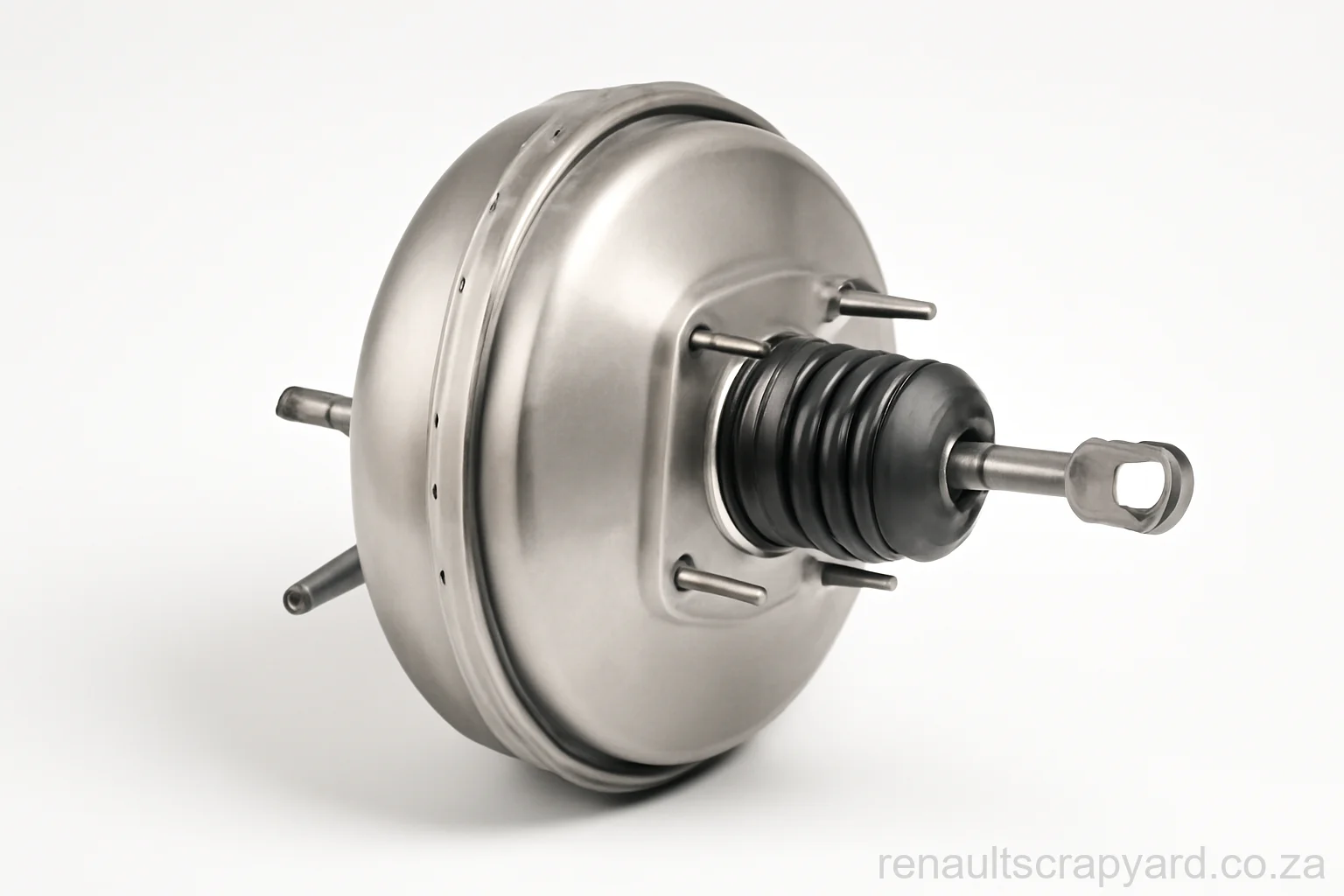
Volvo 850 Brake Booster
The brake booster is a vacuum-assisted component that amplifies the pressure you apply to the brake pedal, making it easier to stop your Volvo without excessive foot force. Volvo models like the XC90, S60, V70, and XC60 use either vacuum-driven boosters (powered by engine vacuum on T5/D5 engines) or electric boosters on newer T8 hybrid models. In South Africa's varied driving conditions—from Durban's coastal humidity to Johannesburg's altitude—a failing booster makes braking feel heavy and increases stopping distances, which is dangerous on our highways. We supply inspected Volvo 850 brake booster compatible with the 1991-1997 range, with warranty included and nationwide courier delivery.
Part Type
Brake Booster
Fits
Volvo 850
Common Signs You Need a New Brake Booster
Common Questions About Brake Booster
How much does a brake booster replacement cost for a Volvo in South Africa?
A vacuum brake booster for common models like the XC90, S60, or V70 costs R2,500–R6,500 for the part, with fitting adding R1,200–R2,000 in labour. Electric brake boosters on T8 hybrid XC90 or XC60 models are significantly more expensive at R12,000–R25,000 due to complexity. Prices vary based on model year and whether you choose OEM or aftermarket parts.
Can a Volvo brake booster be repaired or does it need replacement?
Most brake boosters on Volvo models are sealed units and cannot be economically repaired—replacement is the standard solution. Some specialists may attempt vacuum booster rebuilds on older 240, 740, or 850 models, but parts availability is limited and labour costs often exceed fitting a new unit. For modern XC60, S60, or V90 models, always replace rather than repair.
What's the difference between vacuum and electric brake boosters in Volvo vehicles?
Vacuum boosters are traditional systems found on petrol T5/T6 and diesel D5/D4 engines, using engine vacuum to assist braking—these are common on pre-2020 XC90, S60, and V70 models. Electric boosters are fitted to T8 plug-in hybrids and some newer mild-hybrid B5/B6 models (like the 2020+ XC60 Recharge), providing consistent braking assistance even when the engine is off. Electric boosters are more expensive but offer better performance in hybrid driving modes.
Can I drive my Volvo if the brake booster fails?
You can technically drive with a failed booster, but braking will require extreme pedal pressure and stopping distances will increase dramatically—this is extremely dangerous on South African roads. Older naturally aspirated engines (like the 2.4L in early V70 or S60 models) may still provide some vacuum assist, but modern turbocharged T5/T6 engines offer less vacuum, making the problem worse. Have your Volvo towed to a workshop rather than risk an accident.
How long does a brake booster last on a Volvo?
Vacuum brake boosters on Volvo models typically last 150,000–250,000 km under normal South African driving conditions, though coastal humidity in Durban or Cape Town can accelerate internal diaphragm deterioration. Electric boosters on T8 hybrids are newer technology, but early XC90 T8 models (2016–2018) have shown some failures around 100,000 km. Regular brake system inspections catch booster issues before they become safety hazards.
Helpful Resources
Official Volvo South Africa information on models, service requirements, and safety systems including brake technology.
Technical explanation of vacuum brake booster operation and components, applicable to most Volvo petrol and diesel models.
South African motoring authority with brake system safety information and maintenance recommendations for all vehicle makes.
Need Volvo 850 Brake Booster?
Our specialists will source the exact part you need with fast, nationwide delivery.